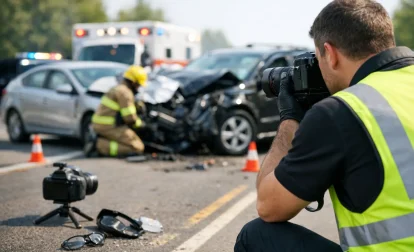
A crash can turn an ordinary drive through Shreveport or Bossier City into a confusing, painful, and fast-moving scene. Knowing how to photograph crash scenes can help preserve details that may disappear within minutes – but your safety and medical needs come first. Do not take photos until you are out of traffic, emergency help has been called when needed, and doing so will not interfere with police, firefighters, or paramedics.
Photos cannot tell the whole story of a collision, but they can preserve conditions that an insurance company may later question: where vehicles came to rest, the damage involved, the weather, a blocked sight line, or debris in the road. When taken safely and promptly, they may become useful evidence in an injury claim.
Put Safety Before Your Camera
If anyone is hurt, call 911. If there is a fire risk, leaking fluid, oncoming traffic, or a vehicle in a dangerous position, move to a safer location if you can do so without worsening injuries. Follow instructions from law enforcement and emergency personnel. Never step into traffic, stand near an unstable vehicle, or remain at the scene simply to get a better photo.
A phone camera is enough. There is no need to delay medical care, argue with the other driver, or inspect damage closely. If you are injured, shaken, or unable to take pictures, ask a passenger or trusted witness to document what they safely can. Your health matters more than any image.
How to Photograph Crash Scenes in a Useful Order
Once the area is safe, start wide and work closer. This approach helps show the full setting before focusing on individual details. Take more photos than you think you need. You can sort through them later, but you cannot recreate the scene after vehicles are towed, debris is cleared, or weather changes.
Begin with wide shots from a safe location. Photograph the intersection, roadway, traffic signals, stop signs, lane markings, nearby businesses, and any construction or visual obstruction. Include the direction each vehicle was traveling when possible. A wide photo may help establish whether a curve, faded line, missing sign, or limited visibility played a role.
Then photograph each vehicle from several angles. Capture the front, rear, both sides, and the points where damage is most visible. Step back far enough to show the entire vehicle, then take closer photos of crushed panels, broken glass, deployed airbags, tire damage, and intrusion into the passenger compartment.
Finally, document details that can change or disappear. These can include skid marks, gouge marks, debris, fluid on the pavement, broken vehicle parts, damaged guardrails, and road conditions. Photograph wet pavement, standing water, loose gravel, potholes, ice, or anything else that may have affected control of a vehicle.
Capture the Details Insurance Companies May Question
Insurers often review a claim with an eye toward minimizing what they pay. They may dispute the force of impact, claim damage was preexisting, or suggest that road conditions were not relevant. Clear, dated images can make those arguments harder when they accurately show the scene.
Photograph license plates, vehicle make and model, and visible company names or identifying numbers on commercial vehicles. After a truck crash, images of the truck, trailer, cargo, lighting, markings, and any visible equipment can be particularly valuable. Do not climb on a truck, enter a vehicle, or touch cargo to get those photos.
If you can do so respectfully and without delaying care, photograph visible injuries such as cuts, bruising, swelling, or torn clothing. Continue taking pictures in the days and weeks after the wreck as bruising develops, surgical wounds heal, mobility devices become necessary, or injuries affect daily life. These photos may help demonstrate the human impact behind medical records and repair estimates.
Do not photograph or post images of seriously injured people without their permission. Be especially careful with children, deceased individuals, and anyone receiving emergency treatment. A claim is about accountability and recovery, not turning a traumatic event into public content.
Preserve Context, Not Just Vehicle Damage
A close-up of a dent shows that contact occurred. It may not show why. Context is often where a crash scene becomes more understandable.
Take photos of traffic lights from the direction of travel, including any signal that appears blocked by a tree limb or difficult to see. Photograph street names, mile markers, nearby landmarks, and the posted speed limit. If the collision happened at night, capture available lighting conditions, but do not use your flash in a way that could distract drivers or responders.
Weather also matters. Rain, fog, glare, and darkness can influence visibility and stopping distance. A photo may not perfectly reproduce what the driver saw, especially after sunset, but it can help preserve the conditions as they existed near the time of the wreck.
If another driver appears impaired, distracted, or angry, do not try to confront or photograph them at close range. Move away and tell law enforcement what you observed. Let officers handle a dangerous situation.
Do Not Alter the Scene for a Better Picture
Avoid moving debris, repositioning vehicles, wiping surfaces, or picking up parts before they are documented by law enforcement. There are exceptions when an immediate safety hazard must be addressed, such as moving out of an active traffic lane. If a vehicle must be moved, take a few quick photos first if it is safe, then follow police instructions.
Do not stage photos or guess at where an object came from. Images are most useful when they are honest, unedited records of what you saw. Avoid filters, heavy edits, drawings, or captions that claim more than the image can prove. Keep the original files on your phone and back them up rather than relying only on screenshots or social media posts.
Pair Photos With Other Information
Photographs work alongside other evidence. Use your phone’s notes app or a piece of paper to write down the date, approximate time, location, weather, and the names of responding agencies. Record the other driver’s contact and insurance information if it can be exchanged safely. Ask willing witnesses for their names and phone numbers, but do not pressure them to give a statement or take sides.
Request the police report when it becomes available. The report may identify witnesses, list vehicles involved, and document initial observations. It is not always the final word on fault, and it may contain mistakes, but it can be an important part of the overall record.
Keep photos of towing receipts, damaged personal property, medical equipment, and the practical effects of the injury. If you miss work, have trouble caring for your children, cannot drive, or need help around the home, a simple dated journal can help connect the crash to the losses your family is experiencing.
Be Careful About What You Share Online
Do not post crash photos, videos, or comments on social media while an insurance claim is pending. A casual post can be misunderstood, taken out of context, or used to suggest that an injury is less serious than it is. The same is true of public discussions about fault, settlement offers, or the other driver.
You do not have to give the other driver’s insurer unrestricted access to your camera roll. If an adjuster requests photos, understand what you are providing and keep copies of everything. Before giving a recorded statement, signing a broad medical release, or accepting a quick settlement, consider speaking with an attorney who can explain what is at stake.
When Photos Are Not Enough
Some crash evidence is short-lived. Surveillance footage may be overwritten. Vehicle data can be lost after repairs or salvage. Witness memories fade. In serious car, truck, or motorcycle collisions, prompt legal guidance can help identify and preserve evidence before it disappears.
Collins Law helps injured people and families across Northwest Louisiana understand their options after a wreck. You work directly with your attorney, and you are never left in the dark about what comes next. There are no upfront legal fees – Collins Law is 100% Free Unless We Win.
If a crash has left you injured, focus first on getting the care you need. Save what you safely can, keep your original photos, and give yourself room to make decisions based on the full impact of the collision – not an insurer’s rush to close the claim.