
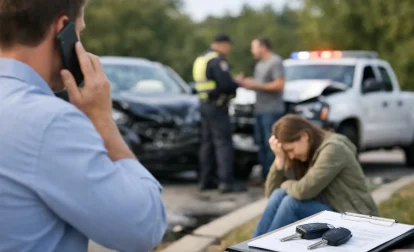
The minutes after a collision can feel unreal. Your car may be damaged, your body may hurt, and the other driver or an insurance adjuster may already be asking questions. Knowing what to do after a car wreck can protect your health first and preserve the information you may need if someone else caused the crash.
What to Do After a Car Wreck: Start at the Scene
If anyone is seriously injured, call 911 immediately. Do not move a person with a possible neck, back, or head injury unless there is an immediate danger, such as fire or oncoming traffic. Even if everyone seems able to walk, call law enforcement after a Louisiana wreck. An officer’s report can document the location, involved vehicles, initial observations, and contact information for the people involved.
Move vehicles out of traffic only when it is safe and practical to do so. Turn on your hazard lights. If you cannot safely move the vehicle, get yourself and your passengers to a safer location away from traffic if possible.
While you wait for police, exchange basic information with the other driver: name, phone number, address, driver’s license number, insurance company, policy information, and vehicle registration. Stay calm and respectful, but do not argue about who caused the wreck. A statement made in shock can be misunderstood later.
If you are physically able, use your phone to photograph the scene. Take wide shots showing vehicle positions, traffic signs, road conditions, skid marks, debris, and visible damage. Then take closer photos of each vehicle, license plates, and any injuries you can safely document. If there are witnesses, ask for their names and contact information before they leave.
Do Not Apologize or Accept Blame
After a frightening collision, many people say “I’m sorry” out of politeness. It is safer not to speculate about fault or make statements that could be treated as an admission. The facts may be more complicated than they first appear. A distracted driver, an unsafe turn, speeding, poor visibility, defective equipment, or another factor may have contributed to the collision.
Give the officer accurate information, but keep it factual. Explain what you saw and felt without guessing about speed, injuries, or who was responsible.
Get Medical Care, Even If the Pain Comes Later
Adrenaline can hide pain for hours or even days. Whiplash, concussions, soft-tissue injuries, internal injuries, and back problems are not always obvious at the crash scene. If emergency personnel recommend transport or evaluation, take that recommendation seriously. If you do not go to the emergency room, arrange prompt medical care with an appropriate provider.
Tell your doctor exactly what symptoms you have and when they began. Headaches, dizziness, numbness, ringing in the ears, trouble sleeping, anxiety, shoulder pain, and worsening stiffness can all matter. Follow the treatment plan, attend appointments, and ask questions when something does not feel right.
Medical treatment is not only about a claim. It is about giving yourself the opportunity to recover. But timely records also help connect your injuries to the wreck when an insurer later tries to argue that your condition was preexisting or unrelated.
Protect the Evidence Before It Disappears
Evidence can disappear quickly after a collision. Vehicles are repaired or totaled, nearby businesses overwrite security footage, witnesses become difficult to reach, and road conditions change. Save every document and item connected to the wreck.
Keep the police report number, photos, videos, medical records, prescriptions, discharge paperwork, repair estimates, towing receipts, rental-car records, and correspondence from insurance companies. Save screenshots of texts or messages related to the crash. Write down what happened while the details are still fresh, including the time, weather, traffic conditions, what each driver did, and any statements you heard at the scene.
Do not repair, sell, or dispose of your vehicle before it has been fully documented. In some cases, the damage pattern, airbag data, onboard computer information, or the condition of a truck or motorcycle can help show how a collision occurred. Your vehicle may be critical evidence, particularly when fault is disputed.
Be Careful With Social Media
Insurance companies look for reasons to reduce or deny claims. A photo, check-in, or casual post can be taken out of context. A picture of you smiling at a family gathering does not prove you are uninjured, but an insurer may try to use it that way.
Avoid posting about the wreck, your injuries, your activities, or settlement discussions. Ask family and friends not to post about you either. Privacy settings can help, but they do not make online content truly private.
Report the Wreck, But Limit Insurance Conversations
Report the collision to your own insurer within the time required by your policy. Give basic facts about the date, location, vehicles, and claim number. You may have coverage that matters regardless of who caused the crash, such as medical payments coverage, collision coverage, rental coverage, or uninsured and underinsured motorist coverage.
The other driver’s insurance company may call quickly. The adjuster may sound friendly and may ask for a recorded statement, broad medical authorization, or an early settlement agreement. You are generally not required to give the other driver’s insurer a recorded statement simply because they request one. You also do not need to accept a fast offer before you understand the full extent of your injuries and losses.
A quick settlement can be tempting when bills are arriving and work has been missed. The trade-off is serious: once you sign a release, you may lose the ability to seek additional payment if treatment becomes more expensive or your injuries last longer than expected.
Do not sign documents you do not understand. Be especially cautious about authorizations that allow an insurer to collect years of unrelated medical history. A claim should be evaluated based on its facts, your injuries, available coverage, and the evidence of fault.
Understand What a Louisiana Car Wreck Claim May Cover
A serious collision can affect much more than your vehicle. Depending on the circumstances, an injured person may seek compensation for past and future medical care, lost income, reduced ability to earn a living, vehicle damage, pain and suffering, mental anguish, and other losses recognized under Louisiana law.
When a wreck causes a fatal injury, surviving family members may face funeral expenses, lost financial support, and an overwhelming emotional loss. Those cases require careful handling from the beginning, especially when multiple family members, insurers, or responsible parties are involved.
Louisiana also applies comparative fault rules. That means a person may still have a claim even if they are alleged to share some responsibility for the collision. However, any percentage of fault assigned to an injured person can affect the recovery. Do not assume you have no case because an adjuster says you were partly to blame.
Speak With a Car Wreck Attorney Before the Pressure Builds
An attorney can investigate the wreck, identify possible insurance coverage, preserve evidence, calculate losses, and handle insurer communications while you focus on medical care. This can be particularly helpful after a truck crash, motorcycle collision, hit-and-run, drunk-driving wreck, or any accident involving severe injuries or disputed fault.
Time matters. Louisiana deadlines can apply to personal injury and wrongful-death claims, and the correct deadline depends on the facts and the law in effect. Waiting too long can put your right to recover at risk. Early legal guidance also gives your attorney a better chance to request video footage, inspect vehicles, and contact witnesses before key evidence disappears.
At Collins Law, injured people in Shreveport, Bossier City, and Northwest Louisiana work directly with their attorney rather than being left to navigate insurer pressure alone. The firm offers case evaluations with no upfront legal fee and is paid only from a successful recovery.
A Final Word for the Days Ahead
You do not have to decide the value of your claim from a hospital bed, a damaged car, or a first phone call from an adjuster. Get the care you need, preserve what you can, and give yourself room to understand what this wreck has truly cost you before making decisions that could shape your future.
